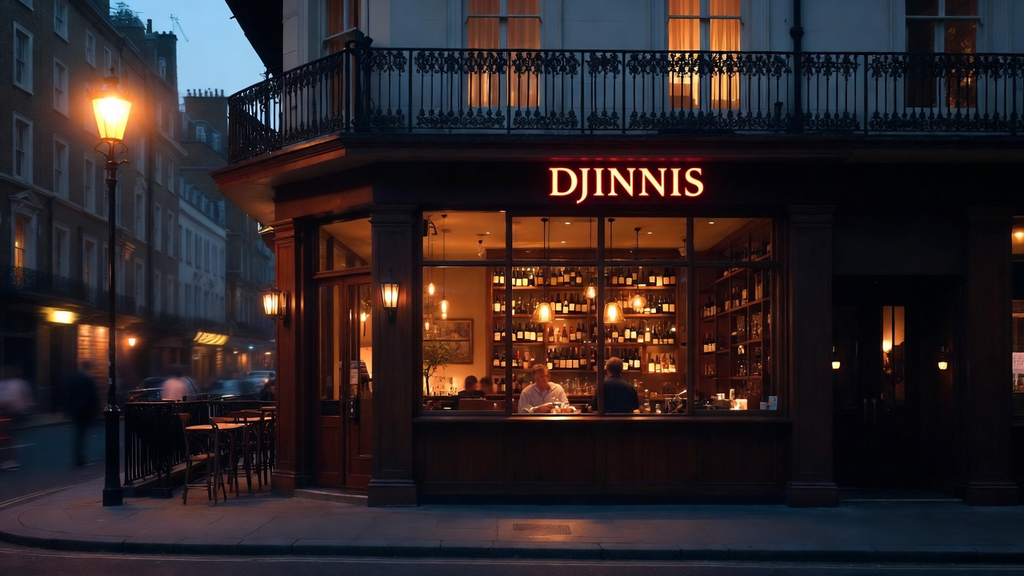
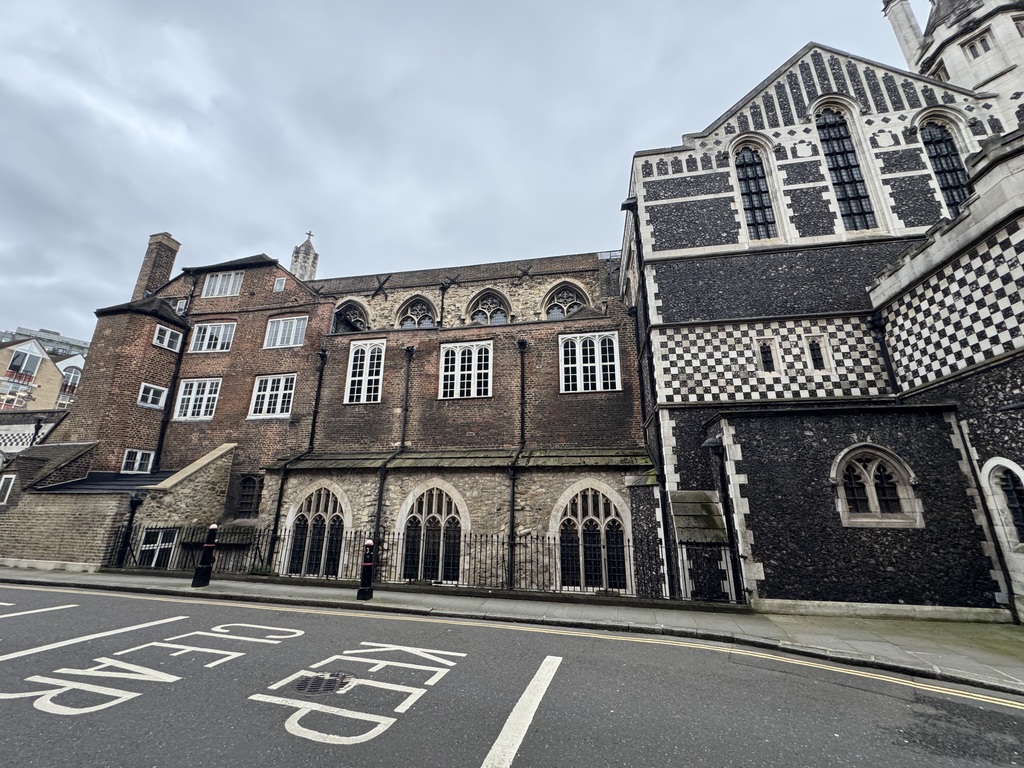
Cloth Fair is a narrow street in Smithfield, tucked behind St. Bartholomew-the-Great church, one of London’s oldest and most atmospheric parishes. The name derives from the famous Bartholomew Fair, a sprawling medieval cloth market held annually on this site from 1133 until 1855. The fair was one of England’s most important commercial events, attracting merchants from across Europe to trade textiles, livestock, and every imaginable commodity in a weeks-long carnival of commerce, entertainment, and occasional debauchery. The street retains several buildings dating from the late 17th and early 18th centuries, including No. 41 and 42, which are among the oldest surviving residential structures in London, having escaped both the Great Fire and the Blitz.
Today, Cloth Fair maintains a peculiarly secretive atmosphere. The narrow street curves away from the modern city, lined with historic buildings whose weathered brick and leaded windows seem to absorb rather than reflect light. The proximity of St. Bartholomew’s Hospital (one of Europe’s oldest hospitals, founded in 1123) and the meat markets of Smithfield lends the area an oddly medieval quality—the ancient marriage of healing, commerce, and slaughter persists here in ways that have been erased elsewhere in London. The street’s warren-like character, hidden from main thoroughfares, creates the sense of a preserved pocket of old London, a place that modern development has somehow overlooked or deliberately avoided. Walking down Cloth Fair, particularly at dusk when the old buildings cast long shadows and the sounds of the city recede, one can imagine the centuries of deals and transactions that have taken place here, the merchants and traders who have walked these same stones, the continuity of commercial life stretching back through the ages.
Soho, the compact, neon-lit heart of London's West End, has long worn its seedy past like a badge of honor. Once royal hunting grounds where the cry "So-ho!" flushed out game in the 16th century, the area exploded into urban life after the Great Fire of 1666, drawing waves of immigrants and opportunists. By the 18th and 19th centuries, it had become a notorious red-light district, with brothels thriving alongside taverns and theaters—far more brazen than the earlier Southwark vice zones. Prostitutes openly solicited in alleyways, while pimps and criminals controlled the trade, turning streets like Greek and Dean into shadowy playgrounds for the wealthy and desperate alike.
The 20th century cemented Soho's reputation as London's undisputed vice capital, especially in the post-war decades. The 1959 Street Offences Act pushed sex workers indoors, inadvertently fueling a boom in strip clubs, "near beer" bars (serving pricey non-alcoholic drinks to fleece punters), and hardcore porn shops after relaxed obscenity laws. Organized crime—once dominated by Maltese pimps like the infamous "Maltese Charlie," who hid gold in margarine tubs—ran protection rackets through the Maltese mafia and later waves of Russian vice lords. Up to nearly 100 strip clubs dotted the area in its heyday, alongside peep shows and erotic cinemas, creating a gritty, intoxicating mix of glamour and danger that inspired films like Last Night in Soho and drew everyone from rock stars to bohemians into its orbit.
Even as gentrification has polished much of Soho—replacing many sex shops with upscale eateries and media offices—echoes of its wild past linger in dimly lit pubs like the Coach and Horses (once a bohemian haunt) and hidden corners where the air still feels charged with secrets. Today, the neighborhood balances its defiant, unapologetic edge with creative energy, but wander its narrow streets at night and you'll sense the ghosts of razor gangs, scandalous speakeasies, and the raw thrill that made Soho one of London's most enduringly notorious quarters.

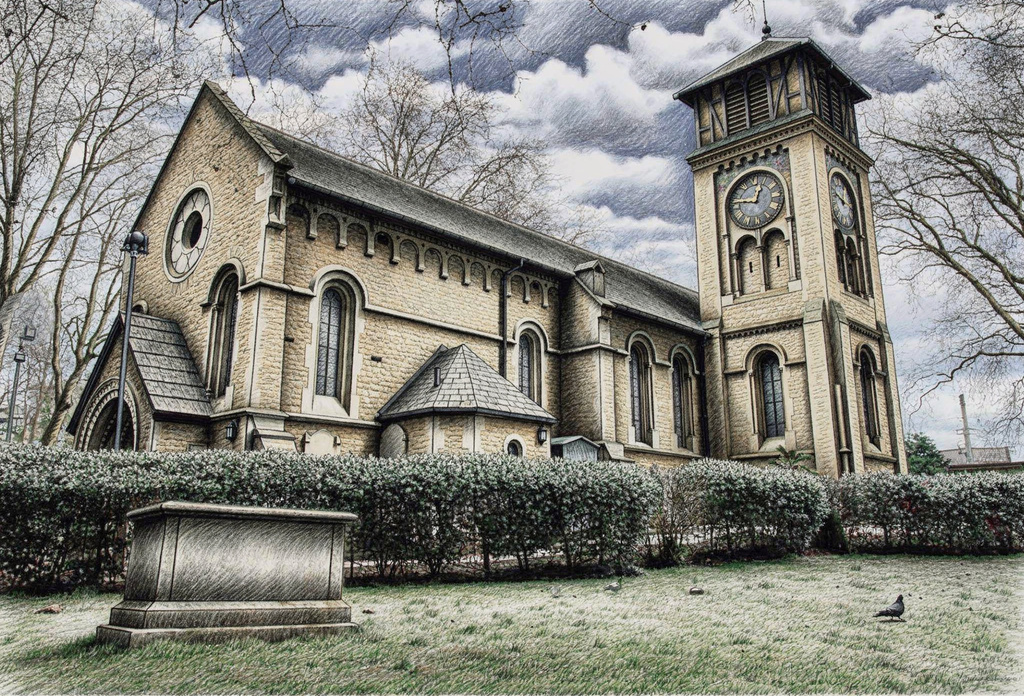
The church interior is simple and ancient, with Norman features and a sense of profound age that comes from nearly two millennia of continuous worship. This combination of sacred antiquity, Victorian Gothic atmosphere, and tangible connection to London’s dead has made St. Pancras Old Church a favourite location for those seeking to understand the city’s relationship with mortality. Here, where the living and the dead have existed in close proximity for centuries, the boundary between past and present, sacred and profane, has always been peculiarly permeable.

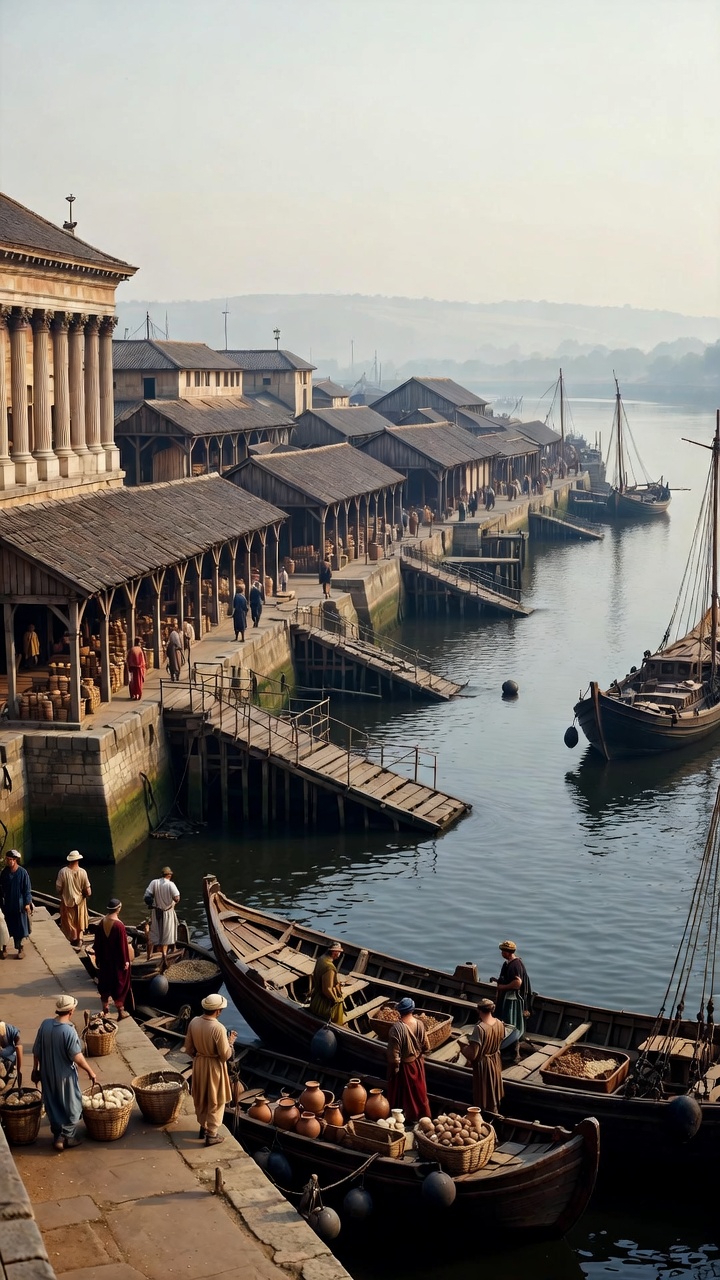
Queenhithe is an ancient Thames dock nestled between Southwark Bridge and Blackfriars Bridge on the north bank of the river. The dock’s name derives from Queen Matilda, wife of Henry I, who held rights to the wharf in the 12th century, though the site’s history as a landing place extends back to Roman times. For nearly a thousand years, Queenhithe served as one of London’s primary commercial wharves, where ships unloaded grain, fish, salt, and timber. Medieval regulations required that all grain entering the City be sold at Queenhithe or Billingsgate, making it a vital artery of London’s food supply. The dock consists of a stone-lined inlet, a small harbour cut into the Thames embankment, with worn steps descending directly into the tidal waters.
Today, Queenhithe is one of the few remaining historic docks still visible along the heavily developed Thames waterfront. The inlet remains open to the river, though it’s now used primarily by leisure craft and the occasional Port of London Authority launch. At low tide, the ancient stones and mud of the riverbed are exposed, revealing centuries of detritus: Tudor pottery shards, Georgian clay pipes, Victorian bottles—the physical residue of London’s maritime history. The dock is overlooked by modern office buildings, creating a jarring juxtaposition between the ancient and contemporary. This layering of time is characteristic of London’s riverside, where Roman traders once bargained, where medieval ships unloaded their cargo, and where the river’s wild power remains barely contained by human engineering. Queenhithe stands as a reminder that beneath the modern city, older patterns of life and commerce persist, waiting to be rediscovered.

Corris is a former slate mining village nestled in the Dyfi Valley in southern Snowdonia, surrounded by steep, densely forested hills and fast-flowing streams. The village’s industrial past—it was a major centre of slate quarrying in the 19th century—left a landscape scarred by abandoned workings, spoil heaps, and dark shafts that plunge into the mountain’s heart. The quarries closed in the early 20th century, and nature has partially reclaimed the industrial ruins, creating an eerie landscape where crumbling buildings and rusted machinery slowly disappear beneath moss, ferns, and regenerating woodland. The area is riddled with old mine workings, many undocumented, and cautionary tales of walkers stumbling upon hidden shafts are common.
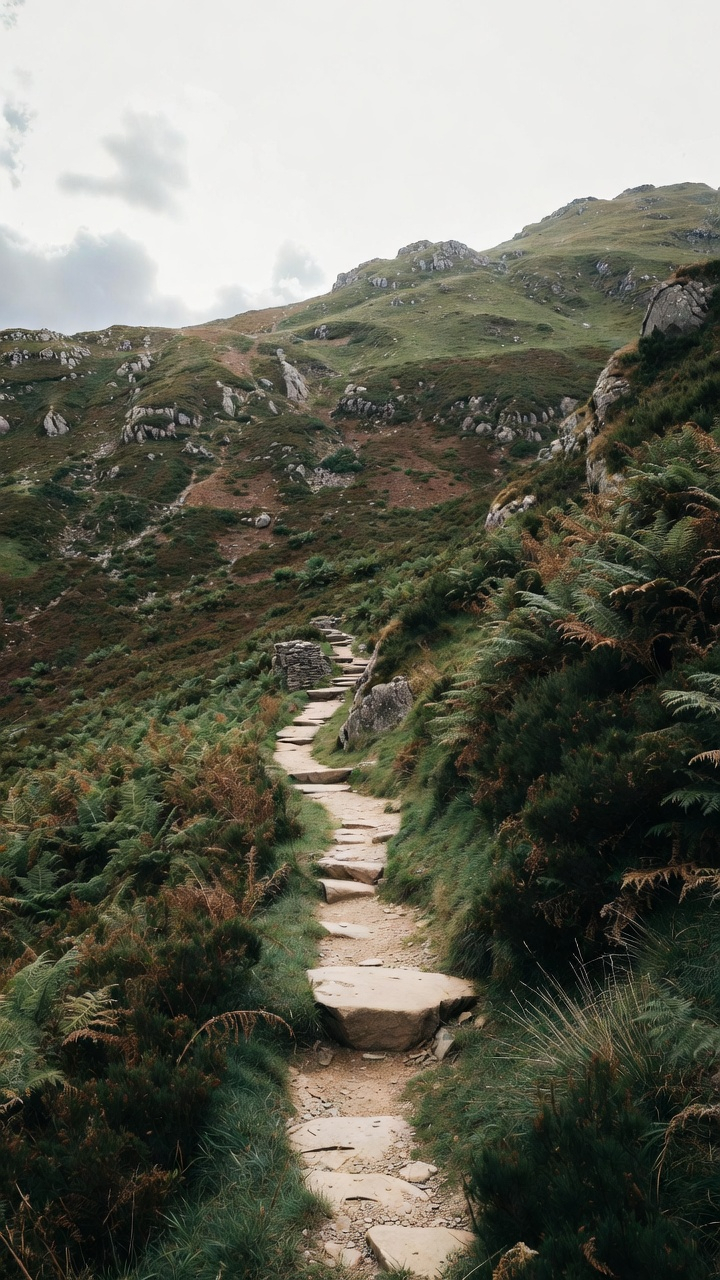
The forest around Corris possesses a particularly dark, primordial character. These are ancient Celtic landscapes, where Welsh mythology locates the dwelling places of the Tylwyth Teg (the Fair Folk) and darker entities. The trees—predominantly sessile oak mixed with birch and rowan—grow thick and gnarled, their branches forming dense canopies that block sunlight even at midday. Beneath the forest floor, the limestone bedrock is honeycombed with natural caves and human-made slate workings that merge into a labyrinthine underworld. The combination of natural and industrial archaeology creates confusion: is that dark opening a natural cave, an old mine adit, or something else entirely? This ambiguity between the natural and manufactured, between the surface world and the underworld, has long given the area an unsettling reputation. Local folklore speaks of secret ways into the mountain, of stairs cut by forgotten hands that lead to chambers where the old powers still hold court. Whether these are merely collapsed mine workings or something more ancient, the forests of Corris guard their secrets well, and those who venture too far from marked paths sometimes report finding stone steps leading down into darkness, their origins and destinations unknown.